

Choosing the right picture frame size can make a surprisingly big difference to how a photograph, print, or piece of artwork looks on your wall. A frame that is too small can make an image feel lost, while one that is too large can overwhelm the room.
The good news is that choosing a picture frame size doesn’t have to be complicated. Once you know the size of your artwork, where you want to display it, and the overall look you’re trying to create, finding the right frame becomes much easier.
Whether you’re framing a family photograph, wedding picture, art print, or creating a gallery wall, this guide explains how to choose the right picture frame size for your home.
Start With the Size of Your picture frame size or Artwork
The most important measurement is the picture frame size of the image or artwork you want to frame.
Measure the actual photo or print from edge to edge, including the width and height. For example, if your photograph measures 30 × 40 cm, look for a frame designed to hold artwork measuring 30 × 40 cm.
It’s worth remembering that the artwork size and the outside dimensions of a frame are not necessarily the same. A frame has its own moulding around the edge, so always check the product’s stated artwork size before ordering.
If you’re unsure which size you need, measuring your photograph first will prevent the most common framing mistake: buying a frame based only on its external dimensions.
Common Picture Frame Sizes
Picture frame sizes come in a wide range of dimensions, from small frames for individual photographs to large formats designed to become a focal point on a wall.
Some popular sizes include:
- 5 × 4 inches
- 7 × 5 inches
- 8 × 10 inches
- 18 × 24 cm
- 30 × 40 cm
- 40 × 50 cm
- 50 × 50 cm
- 60 × 60 cm
- 60 × 80 cm
The best size depends on the photograph, the available wall space, and how prominent you want the image to be.
For smaller photographs, a compact frame can work beautifully on a bedside table, desk, shelf or console. Larger frames are better suited to walls where you want the artwork or photograph to become a noticeable feature.
Should Your Frame Be the Same Size as Your Photo?
In many cases, yes.
If your photograph is already the exact size you want to display, choosing a frame made for that artwork size gives you a simple, clean finish.
For example, a 60 × 60 cm photograph can be placed directly into a 60 × 60 cm frame designed to hold artwork of that size. PhotoFramed’s Maxi Picture Frame 60 × 60 cm is available in black, white, oak, and rustic finishes, giving you several options for matching your interior.
However, you don’t always have to use a frame that matches the photograph exactly.
When Should You Use a Larger Frame?
A larger frame can be useful when you want to create a more substantial display or use a mount around a smaller photograph.
For example, a smaller print can be positioned inside a larger frame with a border or mount around it. This creates a more traditional, gallery-style appearance and can give the image greater visual importance.
A larger frame can also work well when you’re designing a feature wall or combining several different frame sizes.
The important thing is to make sure the artwork, mount, and frame are compatible with the available rebate depth.
How to Choose a Frame for a Large Photograph
Large photographs need a picture frame size that has enough presence to complement the image without distracting from it.
For example, a 60 × 80 cm frame can make an excellent statement piece above a sofa, console table, bed or desk. PhotoFramed’s 60 × 80 cm Maxi Picture Frame is designed for artwork of that size and is available in black, white, oak and rustic finishes.
Before choosing a large frame, consider:
- The size of the wall
- The furniture underneath it
- The orientation of your photograph
- The colour of your walls
- The frame finish
- Whether you want one large statement piece or several smaller frames
A large frame doesn’t necessarily need a large room. The key is to give it enough surrounding space so that the wall doesn’t feel crowded.
Choosing the Right Frame Size for a Gallery Wall
Gallery walls are more flexible because you can combine several frame sizes rather than relying on one large frame.
For example, you could combine:
- One large square frame
- Two medium rectangular frames
- Several smaller portrait or landscape frames
The result can feel much more personal than using identical frames throughout.
A useful approach is to choose the largest frame first and then build the surrounding arrangement around it.
Square frames can work particularly well as focal points. For example, a 50 × 50 cm or 60 × 60 cm frame can provide a strong central element, with smaller photographs arranged around it.
For more inspiration, see our guide on How to create a gallery wall?
How Much Space Should You Leave Around a Picture Frame size?
There’s no single rule that works for every room, but giving a framed picture some breathing room generally makes the display look more intentional.
If you’re hanging one large picture, avoid placing it so close to other furniture or wall features that it feels squeezed into the space.
For gallery walls, leave consistent gaps between frames. Around 5–8 cm is a useful starting point, although the ideal spacing depends on the size of your frames and the wall.
Before putting holes in the wall, arrange the picture frame size on the floor first. You can experiment with different layouts until you’re happy with the proportions.
How to Choose Between Portrait and Landscape Frames
The orientation of your photograph should also influence your frame choice.
Portrait photographs
Portrait frames work particularly well for:
- Family portraits
- Wedding photographs
- Individual photographs
- Certificates
- Fashion photography
- Tall artwork
Landscape photographs
Landscape frames are ideal for:
- Family group photographs
- Holiday photographs
- Landscapes
- City photography
- Panoramic photo frames artwork
Some PhotoFramed products support both portrait and landscape orientation, giving you greater flexibility when arranging your display.
Don’t Forget the Room
The right frame isn’t just about the photograph. Think about where the frame will live.
Living room
A larger frame can work well above a sofa, sideboard or console. A 50 × 50 cm, 60 × 60 cm or 60 × 80 cm frame can create a strong focal point depending on the available wall space.
Bedroom
For bedrooms, consider photographs or artwork that create a calm and personal atmosphere. Medium-sized frames can work above a bedside table, dresser, or chest of drawers.
Hallway
Hallways often benefit from smaller or medium-sized frames arranged as a collection. Several family photographs can turn an otherwise plain corridor into a personal display.
Home office
Smaller photographs, certificates and artwork can be displayed on a desk or wall. Table-top frames are particularly useful if you don’t want to drill into the wall.
PhotoFramed offers smaller table-top options such as 5 × 4 inch, 7 × 5 inch and 8 × 10 inch frames, with several colour finishes available.
What Frame Size Should I Choose for a 60 × 60 Photo?
If your photograph or artwork measures exactly 60 × 60 cm, the simplest option is a frame designed to hold a 60 × 60 cm image.
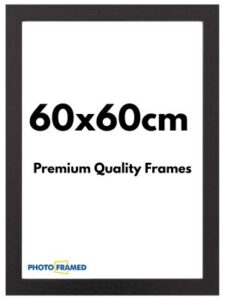
PhotoFramed’s Maxi Picture Frame 60 × 60 cm is specifically designed for artwork of this size. It has a square format and is available in black, white, oak and rustic finishes.
A square frame can also work particularly well as the centrepiece of a gallery wall.
View the PhotoFramed 60 × 60 cm Picture Frame
Should All Your Picture Frames Be the Same Size?
Not necessarily.
Matching frame sizes create a neat, symmetrical appearance, while mixing sizes can make a display feel more relaxed and personal.
If you’re decorating a single wall with several photographs, consider combining different dimensions while keeping something consistent between them.
For example, you could use:
- The same frame colour
- The same frame material
- Similar photograph styles
- A consistent spacing between frames
This creates visual consistency without making the arrangement look too rigid.
How to Choose the Right Frame Colour
Once you’ve selected your picture frame size, think about the frame finish.
Black frames create contrast and can work particularly well with black-and-white photography, modern interiors and bold artwork.
White frames offer a clean, light appearance and can suit colourful photographs, minimalist rooms and bright interiors.
Oak frames bring warmth and can complement natural materials, wooden furniture and family photographs.
Rustic frames can add character to traditional, country or cottage-style interiors.
PhotoFramed currently offers these finishes across several frame sizes, making it easier to create a coordinated display or to intentionally mix different colours.
For more information, read our upcoming guide to black vs white picture frames.
Picture Frame Size Checklist
Before ordering a frame, check these measurements:
- Measure the width of your photograph.
- Measure the height of your photograph.
- Check whether the frame’s listed size refers to the artwork size.
- Decide whether you want a mount or border.
- Check the frame’s rebate depth if using additional materials.
- Consider portrait or landscape orientation.
- Measure your available wall or table space.
- Choose a frame colour that works with your room.
- Consider whether the frame will be displayed on its own or as part of a gallery wall.
- Check the product details before ordering.
Taking a few minutes to measure everything beforehand can save you from ordering the wrong frame size.
Frequently Asked Questions
What is the most common picture frame size?
There isn’t one universal size because photographs and artwork are produced in many different dimensions. Smaller formats such as 5 × 4, 7 × 5 and 8 × 10 inches are useful for individual photographs, while larger sizes such as 50 × 50 cm and 60 × 80 cm can work well as wall art or statement pieces.
How do I measure a photo for a frame?
Measure the actual photograph or artwork from one edge to the opposite edge, both horizontally and vertically. Use those measurements when choosing a frame and check whether the retailer’s stated dimensions refer to the artwork size or the frame’s external dimensions.
Should the picture frame size be bigger than the photo?
It can be. If you want a mount or border around your photograph, a larger frame may be appropriate. If you want a simple edge-to-edge display, choose a frame designed for the actual size of your photograph.
What size frame is best for a large wall?
It depends on the wall and furniture around it. A larger frame such as 60 × 60 cm or 60 × 80 cm can work well as a statement piece, while multiple smaller frames can create a gallery wall.
Can I mix different picture frame sizes?
Absolutely. Mixing frame sizes is one of the easiest ways to create a more interesting gallery wall. Keep one or two elements consistent, such as the frame colour, spacing or style, to make the overall display feel cohesive.
What size frame do I need for a 60 × 60 cm photo?
For a straightforward fit, choose a picture frame size designed to hold a 60 × 60 cm artwork. PhotoFramed’s Maxi Picture Frame 60 × 60 cm is designed for artwork of this size and comes in black, white, oak, and rustic finishes.
Find the Right Picture Frame Size at PhotoFramed
The right picture frame size should complement both your photograph and the space where it will be displayed.
Start by measuring your artwork, then consider the wall or surface, orientation, frame colour, and the overall style you’re trying to achieve. Whether you need a small frame for a favourite family photograph or a large statement frame for artwork, choosing the correct dimensions first makes the rest of the decision much easier.
Explore PhotoFramed’s picture frame collection to find frames in a range of sizes and finishes for your photographs, artwork and home décor.